
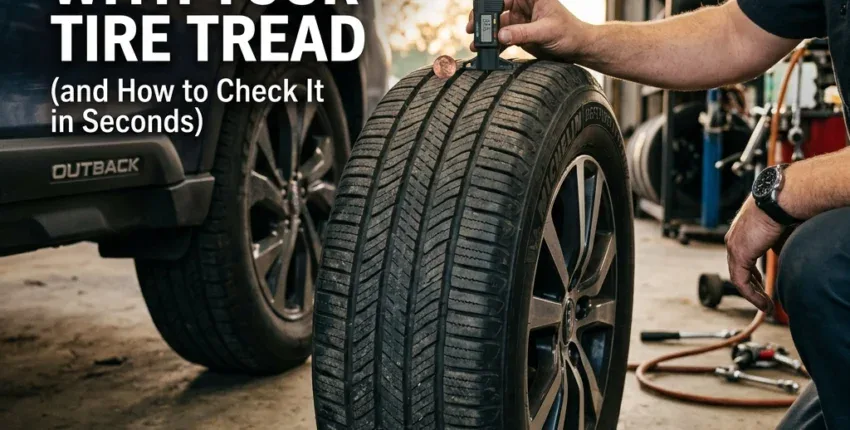
Hey there! If you’re like most of us driving around Riverside, you probably don’t spend a lot of time thinking about your tire tread. It’s one of those “out of sight, out of mind” things: until you’re sliding a bit too much on a rainy day or you notice a strange vibration while cruising down the 91.
At Price Tires & Wheels, we’ve been helping our neighbors stay safe on the road since 1987. We’ve seen it all, and the truth is, most drivers are making at least one or two major mistakes when it comes to their tread. These mistakes don’t just cost you money in the long run; they actually put your safety at risk.
The good news? Keeping an eye on your tread is easier than you think. You don’t need to be a certified mechanic to know when your tires are getting tired. Here are the seven most common mistakes we see and exactly how you can check your tread in seconds.
1. The “Wait Until It’s Bald” Mistake
The biggest mistake people make is waiting until their tires look like racing slicks before they think about a replacement. In California, the legal limit for tread depth is 2/32 of an inch. But here’s the secret: your tires lose a massive amount of their wet-weather grip long before they hit that legal limit.
If you wait until you’re at 2/32″, your stopping distance in the rain can double. We always recommend looking for new tires once you hit 4/32″. It’s that extra cushion of safety that keeps you and your family protected.
2. Skipping Your Rotations
Tires don’t wear out evenly. Because your front tires handle all the steering and most of the braking, they take a much harder beating than the ones in the back. If you never swap them around, the front ones will go bald while the back ones still look brand new.
By skipping rotations, you’re basically throwing away money because you’ll have to replace two tires way sooner than necessary. We recommend a rotation every 5,000 to 7,500 miles. Not sure if it’s worth it? Check out why tire rotation is essential for your car’s performance.

3. Trusting the “Eyeball” Test for Pressure
We’ve all done it: you walk up to the car, look at the tires, and think, “Looks round enough to me!” Unfortunately, your eyes are terrible at measuring PSI (pounds per square inch).
Underinflated tires “slump” slightly, which puts all the pressure on the outer edges (the shoulders) of the tread. Overinflated tires bulge in the middle, wearing out the center of the tread. Both scenarios lead to a premature trip to a tire shop near me. Keeping your pressure at the manufacturer’s recommended level (usually found on a sticker inside your driver’s side door) ensures the tread wears flat and even.
4. Ignoring the Warning Signs of Bad Alignment
Does your car pull to one side when you let go of the steering wheel? Or maybe your steering wheel is slightly crooked when you’re driving straight? That’s a bad alignment, and it’s a tread killer.
Misalignment causes “feathering” or “cupping” on your tires. This means one side of the tire tread is getting scrubbed off while the other side stays tall. It creates a rough ride and a loud humming noise. If you feel that vibration, it’s time to have a professional look at your tire balancing and alignment.
5. Overloading Your “Workhorse”
We get it: you’ve got a truck or an SUV because you need to move stuff. But every tire has a “load rating.” If you’re constantly hauling heavy loads or trailers that exceed what your tires are designed for, the internal heat builds up. This heat can actually cause the tread to separate from the rest of the tire. If you see a “bubble” or a bulge in your sidewall, stop driving immediately. That’s a blowout waiting to happen.

6. Buying the Wrong Tires for Your Lifestyle
When searching for the best budget tires, many people just look at the price tag. While we love a good deal as much as anyone, the “cheapest” tire isn’t always the best value.
For example, if you do a ton of highway commuting, you want a tire with a high treadwear rating (look for the UTQG rating on the sidewall). If you buy a soft performance tire because it was on sale, you might find yourself replacing it in half the time. At Price Tires & Wheels, we help you find how to choose the best vehicle tires for your specific driving habits so you get the most bang for your buck.
7. Forgetting About the Spare
Imagine getting a flat, pulling out your spare, and realizing the tread is cracked or the rubber has rotted away. Tires age even when they aren’t being used. The chemicals in the rubber that keep it flexible eventually dry out. If your spare is more than 6-10 years old, it might not be safe to use, regardless of how much tread is left.
How to Check Your Tread in Seconds (The Penny Test)
You don’t need fancy tools. All you need is a pocket full of change. Here is how to check tire tread using the famous Penny Test:
- Grab a Penny: Hold it so Abraham Lincoln’s head is facing you and upside down.
- Insert into the Groove: Place the penny into one of the tread grooves (the deep “valleys” in the rubber).
- Check the Head: If the top of Lincoln’s head is covered by the tread, you’re doing great! You have at least 2/32″ of tread.
- The “Uh-Oh” Moment: If you can see the top of Lincoln’s entire head, your tires are legally bald. It is time to replace them immediately for your safety.
The Quarter Test (The Safer Version)
If you want to be even safer, use a quarter.
- Insert the quarter into the tread with George Washington’s head upside down.
- If the tread covers the top of Washington’s head, you have at least 4/32″ of tread remaining.
- This is the “Goldilocks” zone where we recommend starting to look for your next set.

What Else Should You Look For?
While you’re down there with your penny, take a quick look for Tread Wear Indicator Bars. These are small, flat rubber bars that live inside the grooves of your tires. When the rest of the tread wears down to be level with these bars, your tires are finished.
Also, keep an eye out for:
- Cracking: Small cracks in the sidewall or between tread blocks (dry rot).
- Bulges: Any “eggs” or lumps on the side of the tire.
- Objects: Nails, screws, or rocks stuck in the tread that might be causing a slow leak.
If you find a nail, don’t panic! Sometimes a simple tire repair or patch is all you need to get back on the road safely without buying a whole new tire.

Why Riverside Drivers Choose Price Tires & Wheels
We know you have a lot of choices when looking for a tire shop near me. But there’s something to be said for a shop that has been part of the community for nearly 40 years.
Since 1987, we’ve built our reputation on honest advice and fair prices. We don’t do high-pressure sales. If your tires have another 5,000 miles in them, we’ll tell you. If they’re dangerous, we’ll show you why. We treat every car that comes into our bays like it’s our own family’s vehicle.
Whether you need a quick rotation, a patch, or you’re looking for the best budget tires that won’t let you down, we’re here to help.
Your Next Steps
Don’t let your tire tread become a “mistake.” Take 30 seconds today to do the Penny Test. If Abe Lincoln is looking a little too exposed, or if you just want a professional to give your tires a once-over, come see us!
Swing by Price Tires & Wheels in Riverside. No appointment is necessary for a quick tread check, and we’d love to help you stay safe on the road.
Price Tires & Wheels
Serving Riverside since 1987
Contact Us | View Our Services