
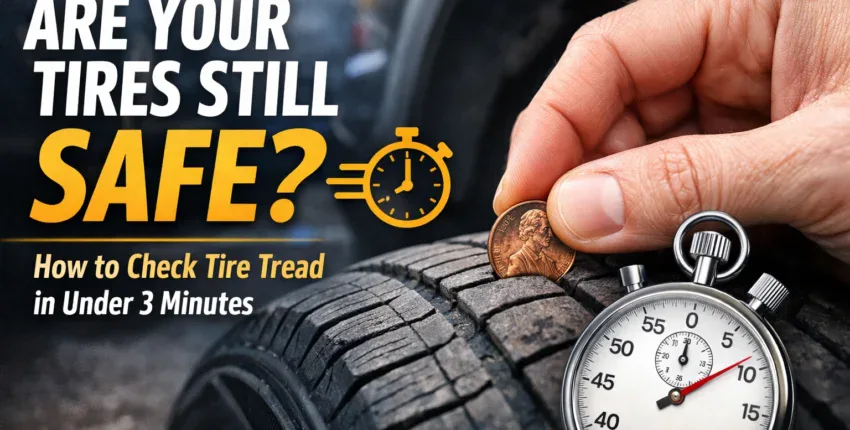
If you’ve lived in Riverside for any length of time, you know that our roads can be a bit of a mixed bag. Whether you’re commuting down the 91 during rush hour, heading up to the mountains for a weekend getaway, or just running errands near UCR, your tires are the only thing keeping your car connected to the pavement.
But when was the last time you actually looked at them? Not just a quick glance as you walked by with groceries, but a real “are these going to keep my family safe” kind of look?
At Price Tires & Wheels, we’ve been serving the Riverside community since 1987. We’ve seen it all: from tires worn down to the metal cords to simple punctures that could have been avoided with a little preventative care. We know that life moves fast, and tire maintenance often falls to the bottom of the to-do list. That’s why we want to show you how to check tire tread in under three minutes. It’s fast, it’s easy, and it could literally save your life.
Why Tread Depth is Your Best Friend on Riverside Roads
Before we jump into the “how-to,” let’s talk about the “why.” Your tire tread isn’t just there for decoration; those grooves are engineered to channel water away from the tire’s contact patch. This prevents something called hydroplaning, which is when your car slides uncontrollably on a thin layer of water.
Even though we don’t get rain every day in Riverside, CA, when we do, the roads get incredibly slick because of the built-up oil and dust. Having deep tread is the difference between stopping safely at a red light and sliding into the intersection.
Beyond safety, keeping an eye on your tread is a smart financial move. Catching uneven wear early can alert you to alignment issues or the need for a tire rotation, helping you avoid a premature tire replacement.

The 3-Minute Safety Check: Three Easy Methods
You don’t need to be a certified mechanic to know if your tires are safe. You just need a pocketful of change or a quick eye. Here are the three most reliable ways to check your tread at home.
1. The Penny Test (The “Legal Limit” Check)
This is the most famous trick in the book. All you need is a standard copper penny.
- How to do it: Take the penny and hold it so Abraham Lincoln’s head is facing down. Insert the penny into several of the tread grooves around the tire.
- The Result: If you can see the very top of Lincoln’s head, your tread is at or below 2/32 of an inch. This is the legal limit in most states, including California. If Abe is fully visible, your tires are legally “bald,” and you need to visit a tire shop near me immediately for a replacement.
- Expert Tip: Don’t just check the middle of the tire. Check the inner and outer edges too. If the middle looks good but the edges are bald, you likely have an alignment or inflation issue.
2. The Quarter Test (The “Safety First” Check)
While the penny test tells you when your tires are dangerous, the quarter test tells you when they are starting to lose their effectiveness.
- How to do it: Use a quarter instead of a penny. Insert it into the tread with Washington’s head facing down.
- The Result: If the tread reaches the top of Washington’s head, you have about 4/32 of an inch of tread left.
- Why this matters: Research shows that tire performance in wet conditions starts to drop significantly once you hit 4/32″. If you pass the penny test but fail the quarter test, it’s time to start looking at tires for sale and planning for a new set in the near future.
3. Looking for Tread Wear Indicator Bars
Did you know your tires have a built-in “early warning system”? Most modern tires have tread wear indicator bars (also known as wear bars). These are small, raised bridges that sit in the bottom of the main tread grooves.
- How to find them: Look deep into the grooves of your tire. You’ll see small rubber bars running across the width of the tire, perpendicular to the tread.
- The Result: When the rest of your tire tread wears down so that it is flush (level) with these bars, your tire is at 2/32″ and is no longer safe to drive.

What Else Should You Look For? (The 60-Second Walkaround)
While you’re down there checking the tread, take an extra minute to look for these “Red Flags.” These are often just as dangerous as low tread:
- Sidewall Bulges or Bubbles: If you see a “goose egg” on the side of your tire, it means the internal structure has failed, often from hitting a pothole or curb. This is a blowout waiting to happen.
- Cracking or “Dry Rot”: In the intense Riverside heat, the rubber in tires can dry out over time. If you see tiny cracks in the sidewall or between the tread blocks, the rubber is becoming brittle and losing its grip.
- Uneven Wear: Is one side of the tire more worn than the other? This usually means your wheels are out of alignment. If the center is worn but the edges aren’t, your tires might be over-inflated.
- Embedded Objects: Look for nails, screws, or sharp rocks. If you find a nail but the tire isn’t flat yet, don’t pull it out! Drive straight to a shop to see if tire patching is an option before the tire fails completely.
Why Riverside Drivers Face Unique Tire Challenges
Living in the Inland Empire means our tires deal with specific stressors. The high summer temperatures can increase tire pressure and accelerate rubber degradation. Additionally, the heavy traffic on our freeways means more stop-and-go driving, which puts extra friction and heat into the tire’s surface.
Because we’ve been a staple in Riverside since 1987, the team at Price Tires & Wheels understands these local conditions. We don’t just sell you a tire; we help you choose the right one for our specific climate and your specific driving habits. Whether you need a budget-friendly option for your daily commute or high-performance rubber for your truck, we prioritize your safety above all else.

When to Stop Testing and Start Shopping
If your tires failed the penny test or you see visible damage, it’s time to take action. Driving on unsafe tires doesn’t just put you at risk: it affects everyone sharing the road with you.
A professional tire repair process can sometimes save a tire if the damage is minor, but if the tread is gone, a replacement is the only safe way forward. We know that buying new tires can feel like a big expense, but think of it as an investment in your vehicle’s longevity and your family’s safety.
Swing By and See Your Neighbors at Price Tires & Wheels
If you’re still not sure whether your tires are safe, don’t guess. Bring your car by Price Tires & Wheels. We’re not just a business; we’re your neighbors. We’ve been right here in Riverside for over three decades, and we’re happy to give your tires a quick, professional inspection: no pressure, no hidden fees, just honest advice.
If it turns out you do need new tires, we’ll help you find a set that fits your budget and your vehicle perfectly. From tire balancing to mounting, we handle it all with the care that comes from 35+ years of experience.
Don’t wait for a rainy day to find out your tires are bald. Grab a penny, head out to the driveway, and do your 3-minute check today!
If you have questions or want to schedule an appointment, contact us or just swing by the shop. We’re here to keep Riverside rolling safely!